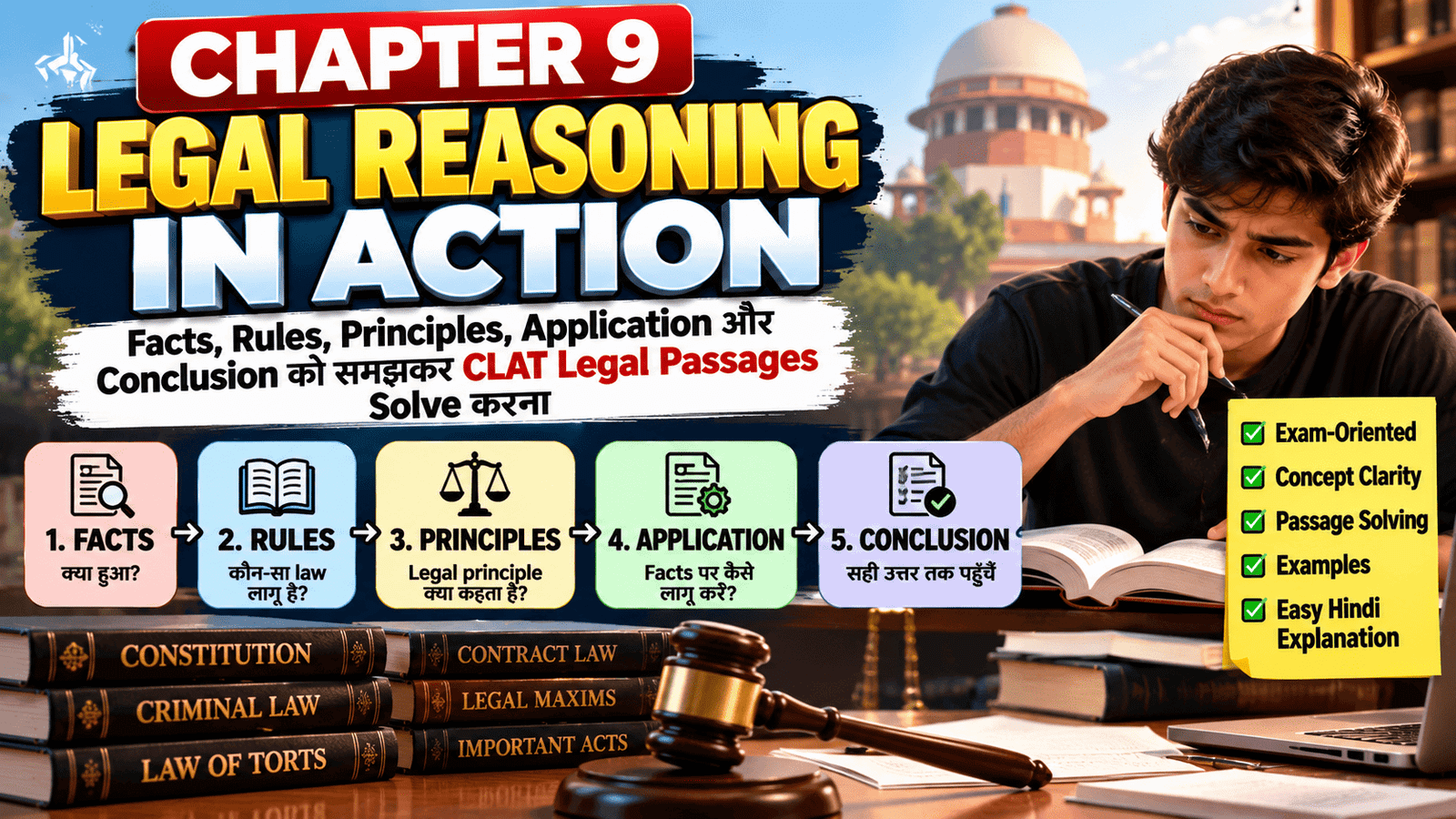
CHAPTER 9
LEGAL REASONING IN ACTION
Facts, Rules, Principles, Application और Conclusion को समझकर CLAT Legal Passages Solve करना
Legal Reasoning का सबसे महत्वपूर्ण हिस्सा केवल Law, Acts, Legal Maxims, Legal Terms या Treaties को जानना नहीं है।
असल परीक्षा तब शुरू होती है जब CLAT आपके सामने एक passage रखता है और कहता है कि:
इस situation में कौन-सा legal principle लागू होगा?
यहीं पर बहुत से students confuse हो जाते हैं।
उन्हें law का नाम पता होता है, legal term पता होती है, लेकिन passage में दिए गए facts को उस legal principle से जोड़ना मुश्किल लगता है।
उदाहरण के लिए student को पता है कि negligence का अर्थ carelessness से जुड़ा है। लेकिन passage में सीधे “negligence” नहीं लिखा होगा। वहाँ लिखा हो सकता है कि एक driver ने traffic rules ignore किए, तेज speed में vehicle चलाया और pedestrian को चोट लग गई।
अब आपको खुद पहचानना है कि:
- कौन-सा fact important है?
- कौन-सी legal duty थी?
- duty का breach हुआ या नहीं?
- उससे harm हुआ या नहीं?
- और दिए गए principle के अनुसार result क्या होगा?
यही Legal Reasoning है।
इस chapter में हम Legal Reasoning को एक ऐसी प्रक्रिया के रूप में समझेंगे जिसे आप किसी भी unfamiliar passage पर apply कर सकें।
1. Legal Reasoning क्या है?
Legal Reasoning का अर्थ है किसी legal principle या rule को दिए गए facts पर apply करके एक legally justified conclusion तक पहुँचना।
सरल भाषा में:
Facts पढ़ो → Legal Rule समझो → Rule को Facts पर लागू करो → Conclusion निकालो।
इसे केवल formula की तरह याद करने की जरूरत नहीं है। इसे एक कहानी की तरह समझिए।
मान लीजिए एक आदमी सड़क पर car चला रहा है।
उसकी duty है कि वह reasonable care के साथ car चलाए।
लेकिन वह mobile phone पर बात करते हुए तेज speed में car चलाता है और सामने से आ रहे व्यक्ति को टक्कर मार देता है।
अब law का सवाल यह नहीं है कि:
“क्या accident हुआ?”
बल्कि सवाल यह हो सकता है:
क्या driver ने वह reasonable care अपनाई जो उससे अपेक्षित थी?
यदि नहीं, तो क्या उसके conduct और injury के बीच legal connection है?
यहीं से negligence का legal reasoning शुरू होता है।
2. Legal Reasoning में सबसे पहले Facts समझिए
किसी भी legal passage में facts सबसे पहले आते हैं।
Facts का अर्थ है घटना में वास्तव में क्या हुआ।
उदाहरण:
A ने B की property में बिना permission प्रवेश किया और B की चीज लेकर चला गया।
यहाँ facts हैं:
- A property में गया।
- B की permission नहीं थी।
- A ने चीज ली।
- A चीज लेकर चला गया।
अब आपको तुरंत answer नहीं चुनना है।
पहले यह देखना है कि कौन-से facts legally relevant हैं।
3. हर Fact Important नहीं होता
CLAT passage में कई बार ऐसी information दी जाती है जो केवल story को complete करती है।
मान लीजिए passage कहता है:
Rahul, a 22-year-old student from Patna, was returning home on his red motorcycle on a rainy evening when he was hit by a car driven by Amit, who was using his mobile phone while driving.
यहाँ हर fact का legal importance समान नहीं है।
“Rahul 22 साल का था” शायद इस particular negligence question में irrelevant हो।
“Patna से था” भी irrelevant हो सकता है।
“Red motorcycle” भी irrelevant हो सकती है।
लेकिन:
Amit was using his mobile phone while driving
एक legally important fact हो सकता है।
क्यों?
क्योंकि यह reasonable care के breach की ओर संकेत कर सकता है।
इसलिए passage पढ़ते समय आपको facts को legal relevance के हिसाब से देखना चाहिए।
4. Legal Principle क्या होता है?
Legal Principle वह legal rule या proposition है जिसके आधार पर question को solve करना है।
उदाहरण:
A person who fails to take reasonable care and thereby causes foreseeable harm to another may be liable for negligence.
यह एक legal principle है।
अब passage में facts दिए जाएंगे।
आपको देखना है कि facts इस principle की conditions को satisfy करते हैं या नहीं।
5. Principle को अपने शब्दों में समझिए
कई students principle पढ़कर सीधे options पर चले जाते हैं।
यह सबसे common mistake है।
अगर principle लिखा है:
A person is liable for negligence if he breaches a duty of care and causes legally recognized harm.
तो इसे पहले अपने मन में simple Hindi में समझिए:
“अगर किसी व्यक्ति की duty थी, उसने reasonable care नहीं ली और उसके कारण legally recognized harm हुआ, तो negligence की liability हो सकती है।”
अब passage पढ़ना आसान हो जाता है।
6. Application क्या है?
यह Legal Reasoning का सबसे महत्वपूर्ण हिस्सा है।
Application का अर्थ है:
दिए गए facts को legal principle से जोड़ना।
मान लीजिए principle है:
A person who voluntarily accepts a known risk may be prevented from claiming for an injury arising from that accepted risk.
अब facts हैं:
A professional boxer voluntarily participates in a boxing match and is injured by a normal punch during the match.
आपको पूछना है:
क्या A ने activity में voluntarily participate किया?
हाँ।
क्या उसे activity की सामान्य risks का knowledge था?
हाँ, facts ऐसा indicate करते हैं।
क्या injury उसी accepted activity के normal risk से हुई?
हाँ।
इसलिए volenti non fit injuria का principle relevant हो सकता है।
यही application है।
7. Conclusion कैसे निकालें?
जब principle को facts पर apply कर लिया जाए, तब conclusion निकालिए।
उदाहरण:
Fact: A ने knowingly risk accept किया।
Principle: Voluntary acceptance of a known risk may operate as a defence.
Application: A ने voluntarily activity में participate किया और वही known risk materialize हुआ।
Conclusion: A का claim applicable circumstances में fail हो सकता है।
यही legal reasoning है।
8. एक पूरा उदाहरण
अब एक complete example देखते हैं।
Principle
A person who fails to exercise reasonable care and causes injury to another may be liable for negligence.
Facts
Ravi driving करते समय लगातार mobile phone पर message कर रहा था। उसने traffic signal पर ध्यान नहीं दिया और pedestrian Mohan को टक्कर मार दी। Mohan घायल हो गया।
अब धीरे-धीरे सोचिए।
Step 1 — Duty
Driver से reasonable care की expectation थी।
Step 2 — Breach
Mobile phone पर message करते हुए driving करना reasonable care के breach की ओर संकेत करता है।
Step 3 — Harm
Mohan injured हुआ।
Step 4 — Connection
Inattention के कारण signal miss हुआ और accident हुआ।
Conclusion
Given facts में Ravi पर negligence की liability बन सकती है, subject to the applicable legal requirements.
यही complete legal reasoning है।
9. “क्यों?” पूछना सीखिए
Legal Reasoning में answer चुनते समय अपने आप से एक सवाल पूछिए:
“क्यों?”
अगर आपने option चुना:
A is liable for negligence.
तो खुद से पूछिए:
क्यों?
क्योंकि:
- duty थी,
- reasonable care नहीं ली,
- breach हुआ,
- harm हुआ,
- और causal connection दिखाई देता है।
अगर आप यह explanation दे सकते हैं, तो answer generally stronger है।
लेकिन यदि आपका जवाब है:
“क्योंकि option सही लग रहा है।”
तो आपने reasoning नहीं की है।
10. Law और Facts को अलग-अलग देखिए
Legal passage में दो चीजें होती हैं:
Law
क्या legal principle कहता है?
Facts
वास्तव में क्या हुआ?
पहले दोनों को अलग समझिए।
फिर दोनों को connect कीजिए।
उदाहरण:
Law: A person who knowingly accepts a risk may not be able to claim for injury arising from that risk.
Facts: A willingly enters a boxing match and gets injured by a normal punch.
Connection: Known risk + voluntary participation + injury arising from that risk.
Conclusion: Volenti principle may apply.
11. Principle में दिए गए सभी Elements पहचानिए
बहुत सारे legal rules में multiple elements होते हैं।
मान लीजिए principle है:
A person is liable for negligence where there is a duty of care, breach of that duty, causation and legally recognized damage.
यहाँ चार important elements हैं:
- Duty of care
- Breach
- Causation
- Damage
अब passage में अगर तीन elements हैं लेकिन चौथा नहीं है, तो answer बदल सकता है।
इसीलिए principle को पूरा पढ़ना जरूरी है।
12. “Unless” और “Except” को ध्यान से पढ़िए
Legal passages में छोटे words बहुत important हो सकते हैं।
जैसे:
unless
except
provided that
subject to
only if
if and only if
provided however
ये words rule की scope बदल सकते हैं।
उदाहरण:
A person is liable unless he can establish a recognized defence.
इसका मतलब है कि general rule liability का है, लेकिन defence होने पर result बदल सकता है।
13. “May” और “Must” अलग हैं
Legal passage में:
may
और
must
का difference महत्वपूर्ण है।
May
Possibility/discretion को indicate कर सकता है।
Must
Requirement/obligation को indicate कर सकता है।
उदाहरण:
Court may grant relief.
इसका अर्थ यह नहीं कि court हर case में relief देने के लिए बाध्य है।
लेकिन:
Court must follow the statutory requirement.
यह stronger obligation है।
14. “Generally” और “Always” को confuse मत करें
Legal principles अक्सर exceptions के साथ operate करते हैं।
यदि passage कहता है:
Generally, a person cannot transfer a better title than he possesses.
तो “generally” important है।
यदि option कहता है:
A person can never transfer a better title.
तो यह overly absolute हो सकता है।
यहाँ Nemo dat quod non habet का example याद आता है।
General principle मौजूद है, लेकिन law में exceptions हो सकते हैं।
15. CLAT में Extreme Options
कई बार options में words होंगे:
- always
- never
- only
- completely
- under all circumstances
- in every case
Legal questions में ऐसे absolute statements को carefully examine करना चाहिए।
यह कोई universal rule नहीं है कि “always” वाला option गलत ही होगा।
लेकिन अगर principle itself exceptions recognize करता है, तो absolute option suspicious हो सकता है।
16. Legal Reasoning में Moral Judgment से बचिए
यह बहुत important है।
मान लीजिए passage में लिखा है:
A stole food because he was extremely poor.
अब आपके मन में sympathy आ सकती है।
आप सोच सकते हैं:
“बेचारा गरीब था, इसलिए उसे punishment नहीं मिलनी चाहिए।”
लेकिन Legal Reasoning में आपको sympathy के आधार पर answer नहीं चुनना है।
आपको देखना है:
Given principle क्या कहता है?
यदि principle कहता है:
Intention to steal is necessary for the offence.
तो facts में intention था या नहीं, यह देखना होगा।
Legal reasoning:
Facts → Law
ना कि:
Emotion → Answer
17. Justice और Sympathy अलग चीजें हैं
Law कई बार morally uncomfortable result दे सकता है।
उदाहरण:
किसी contract में person ने clear obligation accept किया था।
बाद में उसे contract inconvenient लगता है।
आपको यह नहीं देखना है कि:
“उसके लिए मुश्किल हो रही है।”
आपको देखना है:
क्या legally recognized ground है जिससे वह obligation से बच सकता है?
यही legal reasoning है।
18. Facts में Intent बहुत महत्वपूर्ण हो सकता है
Criminal law में mental state बहुत महत्वपूर्ण हो सकती है।
उदाहरण:
A ने B को accidentally चोट पहुंचाई।
दूसरी situation:
A ने जानबूझकर B को चोट पहुंचाने के उद्देश्य से हमला किया।
Outward result similar हो सकता है:
B injured
लेकिन mental state अलग है।
इसलिए:
Mens rea
का question उठ सकता है।
19. Same Result, Different Law
दो लोगों से same result हो सकता है लेकिन legal liability अलग हो सकती है।
मान लीजिए:
A ने accidentally किसी को hit किया।
B ने intentionally किसी को hit किया।
दोनों situations में victim injured है।
लेकिन legal analysis में:
- intention,
- knowledge,
- negligence,
- applicable offence,
- circumstances
सब अलग हो सकते हैं।
इसलिए केवल result देखकर answer नहीं चुनना चाहिए।
20. Legal Reasoning में “Relevant Fact” पहचानना
एक छोटा example:
A, a famous businessman, was driving his expensive black car at 90 km/h in a residential area where the speed limit was 40 km/h. He was also using his phone. He hit B, who was crossing the road at a designated crossing.
अब relevant facts:
- Speed limit 40 km/h थी।
- A 90 km/h पर चला रहा था।
- A mobile use कर रहा था।
- B designated crossing पर था।
- Accident हुआ।
“Expensive black car” इस negligence analysis में शायद irrelevant हो।
यही fact filtering है।
21. Cause और Mere Sequence में फर्क
हर घटना जो पहले हुई है, जरूरी नहीं कि वही legal cause हो।
मान लीजिए:
A ने B को हल्का धक्का दिया।
B hospital गया।
Hospital जाते समय B की car accident में damage हो गई।
अब सवाल होगा:
क्या A का act B की property damage का legally sufficient cause था?
सिर्फ इतना कि:
A का act पहले हुआ
इससे causation automatically establish नहीं होती।
Legal reasoning में causal connection examine करना पड़ता है।
22. Foreseeability
Tort law और negligence के context में यह question महत्वपूर्ण हो सकता है:
क्या harm reasonably foreseeable था?
मान लीजिए A किसी crowded road पर बिना देखे भारी object फेंकता है और किसी व्यक्ति को चोट लगती है।
Injury का possibility reasonably foreseeable हो सकता है।
लेकिन यदि harm पूरी तरह extraordinary और unrelated chain से हुआ, तो causation का legal analysis अलग हो सकता है।
23. Duty of Care
Negligence के passage में यह question अक्सर पूछा जा सकता है:
क्या defendant पर claimant के प्रति duty of care थी?
एक driver से road users के प्रति reasonable care की expectation हो सकती है।
एक doctor से patient के treatment में professional standard of care की expectation हो सकती है।
एक manufacturer से consumers के संदर्भ में applicable legal duties हो सकती हैं।
Duty का existence facts और applicable law पर depend करता है।
24. Breach of Duty
Duty होना और duty breach होना दो अलग बातें हैं।
उदाहरण:
Driver की duty थी reasonable care लेना।
यदि driver carefully vehicle चला रहा था और accident किसी unforeseeable event के कारण हुआ, तो केवल accident होने से breach automatically establish नहीं होता।
लेकिन यदि driver:
- drunk था,
- phone use कर रहा था,
- red light jump कर रहा था,
- dangerously overspeed कर रहा था,
तो breach का argument मजबूत हो सकता है।
25. Defence को पहचानना
Legal Reasoning में केवल claimant का case नहीं पढ़ना है।
Defendant के possible defences भी देखिए।
Tort law में possible defences context के अनुसार:
- Volenti non fit injuria
- Contributory negligence
- Inevitable accident
- Act of God
- Necessity
- Statutory authority
जैसे concepts हो सकते हैं।
यदि question में defendant के favour में कोई defence दिया है, तो उसे ignore नहीं करना चाहिए।
26. Volenti का उदाहरण
Principle
A person who voluntarily and knowingly accepts a risk may be unable to claim for injury arising from that accepted risk.
Facts
A professional football player participates in a normal match and suffers an ordinary injury during play.
अब question:
क्या उसने voluntarily activity participate की?
हाँ।
क्या ordinary risk inherent था?
हाँ।
क्या injury उसी ordinary risk से जुड़ी थी?
यदि facts ऐसा establish करते हैं, तो volenti principle relevant हो सकता है।
लेकिन यदि injury opponent ने जानबूझकर rules के खिलाफ serious attack करके दी, तो analysis अलग हो सकता है।
27. Contributory Negligence
मान लीजिए driver negligent था, लेकिन injured person ने भी अपनी safety के लिए reasonable care नहीं ली।
ऐसी situation में:
Contributory negligence
का issue उठ सकता है।
उदाहरण:
Driver तेज speed में था।
Pedestrian भी बिना देखे road पर अचानक चला गया।
अब court को facts के आधार पर दोनों parties का conduct examine करना पड़ सकता है।
इसका exact legal effect applicable law पर depend करता है।
28. Contract Reasoning
Contract-based passage में सबसे पहले देखिए:
Offer
क्या किसी party ने definite proposal किया?
Acceptance
क्या दूसरे party ने उसे accept किया?
Consideration
क्या consideration मौजूद है, subject to applicable law?
Intention / enforceability
क्या arrangement legally enforceable है?
Capacity
क्या parties legally competent थीं?
Free consent
क्या consent freely given था?
Breach
क्या contractual obligation टूट गई?
Remedy
क्या legal relief available है?
यह पूरी chain passage solve करने में मदद करती है।
29. Offer और Invitation to Offer
यह एक common conceptual issue है।
एक shop में product display है:
Laptop — ₹50,000
हर situation में यह automatically legal offer नहीं होता।
कई contexts में यह invitation to offer हो सकता है।
Customer product खरीदने का offer करता है और seller applicable terms के अनुसार accept करता है।
इसलिए:
Advertisement/display = automatically offer
ऐसा मान लेना गलत हो सकता है।
30. Acceptance
Acceptance का basic idea है:
Offer के terms को legally required manner में accept करना।
यदि A कहता है:
“मैं अपना laptop ₹50,000 में बेचूँगा।”
और B कहता है:
“मैं ₹40,000 में खरीदूँगा।”
तो B ने original offer accept नहीं किया; उसने अलग proposal/counter-offer किया हो सकता है।
Facts और applicable contract law देखना जरूरी है।
31. Criminal Law Reasoning
Criminal passage में पहले identify करें:
- Act क्या हुआ?
- Mental state क्या थी?
- कौन-सा offence alleged है?
- क्या required elements मौजूद हैं?
- कोई defence है?
- क्या कोई exception है?
उदाहरण:
A ने B की property उठा ली।
अब केवल act देखकर theft conclude नहीं करना चाहिए।
देखना होगा:
- क्या A ने property dishonestly ली?
- क्या property किसी और की थी?
- क्या A ने उसे permanently deprive करने का relevant intention रखा?
- applicable statutory elements क्या हैं?
यही legal reasoning है।
32. “Mistake of Fact” और “Mistake of Law”
मान लीजिए A ने B की umbrella उठा ली क्योंकि उसे genuine belief था कि umbrella उसकी अपनी है।
यह factual mistake का example हो सकता है।
दूसरी तरफ:
A कहता है:
“मुझे पता नहीं था कि law ऐसा करना prohibit करता है।”
यह ignorance of law का issue है।
Legal consequences दोनों situations में अलग हो सकते हैं।
33. Criminal Intent का Example
A ने B को punch किया।
Situation 1
A ने जानबूझकर punch किया।
Situation 2
A ने भीड़ में accidentally B को hit कर दिया।
Situation 3
A ने B को बचाने के लिए उसे धक्का दिया क्योंकि सामने dangerous object गिर रहा था।
तीनों में physical act similar दिखाई दे सकता है।
लेकिन:
- intention,
- circumstances,
- necessity,
- justification
अलग हैं।
इसलिए legal conclusion भी अलग हो सकता है।
34. Property Law Reasoning
Property passage में questions हो सकते हैं:
- Ownership किसकी है?
- Possession किसके पास है?
- Title valid है?
- Transfer हुआ?
- Transferor के पास authority थी?
- कोई exception है?
उदाहरण:
A के पास property का valid title नहीं है और वह B को property transfer करता है।
यहाँ nemo dat quod non habet का principle relevant हो सकता है।
लेकिन फिर देखिए:
क्या कोई statutory exception है?
यदि है, तो result बदल सकता है।
35. Constitutional Reasoning
Constitutional passage में पहले identify करें:
- कौन-सा right involved है?
- State action है?
- classification है?
- discrimination है?
- freedom restricted है?
- reasonable restriction है?
- fundamental right directly involved है?
- constitutional limitation क्या है?
उदाहरण:
Government किसी particular group को केवल arbitrary reason के आधार पर benefit से exclude करती है।
अब equality और classification का question उठ सकता है।
36. Equality Reasoning
अगर passage में discrimination है, तो तुरंत “Article 14 violation” बोल देना पर्याप्त नहीं है।
पूछिए:
क्या अलग-अलग लोगों को अलग treatment दिया गया?
यदि हाँ:
क्या classification intelligible basis पर है?
और:
क्या उस classification का law के objective से rational connection है?
अगर classification arbitrary है, तो constitutional problem हो सकती है।
37. Freedom of Speech Reasoning
यदि State किसी speech को restrict करती है, तो केवल यह कहना पर्याप्त नहीं:
“Speech is a fundamental right, इसलिए restriction invalid है।”
Legal reasoning में देखना होगा:
- restriction किस law के तहत है?
- restriction किस purpose के लिए है?
- क्या Constitution permitted grounds recognize करता है?
- क्या restriction reasonable है?
यही difference है:
Legal slogan
और
Legal reasoning
के बीच।
38. Natural Justice Reasoning
अगर passage में administrative decision है, तो पूछिए:
पहला सवाल
क्या decision-maker biased था?
→ Nemo judex in causa sua
दूसरा सवाल
क्या affected person को hearing मिली?
→ Audi alteram partem
तीसरा सवाल
क्या decision proper legal authority के अंदर था?
→ Ultra vires
चौथा सवाल
क्या authority ने relevant considerations देखीं?
→ Administrative law reasoning
इस तरह एक passage में multiple legal principles overlap कर सकते हैं।
39. Multiple Principles होने पर क्या करें?
कई बार passage में एक से अधिक principles दिखाई देंगे।
ऐसी situation में सबसे specific principle को देखिए।
उदाहरण:
General principle:
No person should be arbitrarily deprived of property.
Specific principle:
A valid contract requires certain essential elements.
अगर passage specifically contract formation पर है, तो contract principle ज्यादा relevant हो सकता है।
इस concept को:
Specific rule over general rule
के रूप में समझा जा सकता है, subject to applicable law.
40. Same Facts पर अलग Law
एक ही factual situation अलग legal questions पैदा कर सकती है।
मान लीजिए A ने B को vehicle से hit किया।
Possible questions:
Criminal Law
क्या A ने criminal offence किया?
Tort Law
क्या A negligence के लिए civilly liable है?
Contract Law
क्या A और B के बीच कोई contractual obligation थी?
Insurance Law
क्या insurance coverage relevant है?
इसलिए question का exact wording बहुत important है।
41. Question को पढ़े बिना passage solve मत कीजिए
पहले passage पढ़कर पूरा answer मन में बनाने की कोशिश करने के बजाय question देखिए।
उदाहरण:
Passage negligence पर है।
Question पूछता है:
Which defence is most relevant?
अब आपको negligence establish करने के बजाय defence ढूँढना है।
दूसरा question:
Who is likely to be liable?
अब focus liability पर होगा।
तीसरा:
Which principle best applies?
अब legal principle identify करना है।
इसलिए question का demand समझना जरूरी है।
42. “Best Answer” का अर्थ
CLAT में options कभी-कभी सभी superficially reasonable लग सकते हैं।
लेकिन आपको:
Most legally appropriate answer
चुनना है।
मान लीजिए options:
A. A is morally wrong.
B. A is definitely guilty.
C. A may be liable for negligence because the required elements are satisfied.
D. A should apologize.
अगर principle negligence पर है, तो C सबसे legally relevant answer हो सकता है।
A moral judgment है।
B शायद overstatement है।
D legal conclusion नहीं है।
43. “May” वाले Answers को समझना
अगर facts पूरी तरह final conclusion establish नहीं करते, तो answer में:
may be liable
या
could be liable
जैसा language ज्यादा appropriate हो सकता है।
यदि option कहता है:
A is automatically liable under all circumstances.
तो आपको principle और exceptions देखनी चाहिए।
44. CLAT Legal Reasoning में “New Facts” से मत घबराइए
कभी-कभी passage ऐसी situation देगा जो आपने book में exactly नहीं पढ़ी।
उदाहरण:
आपने negligence पढ़ी है।
लेकिन passage में drone delivery accident का example दिया है।
आपको drone law अलग से जानना जरूरी नहीं हो सकता।
अगर principle है:
A person is liable when failure to exercise reasonable care causes foreseeable harm.
तो drone को देखकर डरने की जरूरत नहीं।
Facts बदल गए हैं।
Legal principle वही है।
45. Principle को Facts से जोड़ना ही Skill है
मान लीजिए principle है:
A person cannot delegate a power unless the law permits further delegation.
Facts:
Government authority ने X को statutory power delegate की।
X ने बिना authorization वही power Y को दे दी।
अब:
Delegatus non potest delegare
relevant हो सकता है।
यहाँ आपको delegation की पूरी administrative law history याद होना जरूरी नहीं।
आपको principle और facts का relationship पहचानना है।
46. CLAT में Legal Reasoning को “Story” की तरह पढ़िए
एक legal passage को इस तरह पढ़िए:
कौन?
Person/State/Company कौन है?
क्या किया?
Act क्या हुआ?
क्यों किया?
Intention या purpose क्या था?
किसके साथ हुआ?
Victim/other party कौन है?
नुकसान क्या हुआ?
Harm/loss क्या हुआ?
कौन-सा rule दिया है?
Legal principle क्या है?
Rule किस पर लागू होगा?
Facts किससे match करते हैं?
Result क्या होगा?
Conclusion क्या निकलता है?
यह natural reading approach है।
47. एक Full CLAT-Style Example
Principle
A person who voluntarily and knowingly accepts a risk cannot ordinarily claim compensation for harm resulting from that very risk, subject to recognized exceptions.
Facts
Rohan, a trained boxer, voluntarily enters a boxing competition. Before the match, he understands that ordinary physical injuries may occur. During the match, his opponent follows the rules and punches him, causing a minor injury. Rohan later claims damages solely because he was punched.
Analysis
Rohan:
- voluntarily competition में गया;
- boxing के ordinary risks जानता था;
- risk accept किया;
- injury ordinary activity के दौरान हुई;
- opponent ने rules follow किए।
इसलिए volenti non fit injuria का principle relevant हो सकता है।
Conclusion
Rohan का claim accepted risk के कारण fail हो सकता है, subject to applicable law and facts.
48. दूसरा Full Example — Negligence
Principle
A person may be liable for negligence when they owe a duty of care, breach that duty, and the breach causes legally recognized harm.
Facts
A school bus driver drives at excessive speed near a school despite a clearly marked speed limit. He ignores a pedestrian crossing and hits a student.
Analysis
Driver:
- road users/students के संदर्भ में care obligation रख सकता है;
- excessive speed से duty breach का evidence है;
- pedestrian crossing ignore की;
- student injured हुआ;
- conduct और injury के बीच causal link दिखाई देता है।
Conclusion
Facts negligence liability support कर सकते हैं.
49. तीसरा Example — Natural Justice
Principle
A person affected by an adverse decision should ordinarily be given a fair opportunity of hearing where natural justice applies.
Facts
A university committee expels a student for alleged misconduct without informing him of the allegations and without giving him an opportunity to respond.
Analysis
Student:
- adverse decision से directly affected है;
- allegations की notice नहीं मिली;
- hearing का opportunity नहीं मिला।
Conclusion
Audi alteram partem का principle relevant है और decision procedural fairness के आधार पर challenge हो सकता है, subject to applicable rules and circumstances.
50. चौथा Example — Ultra Vires
Principle
A public authority cannot exercise power beyond the authority granted to it by law.
Facts
A statute gives Authority X power to regulate street parking. X issues a rule banning all private ownership of vehicles in the entire city.
Analysis
Authority को parking regulate करने की power दी गई थी।
लेकिन उसने:
private vehicle ownership ban
कर दिया।
यह power की scope से बाहर जा सकता है।
Conclusion
Rule ultra vires हो सकता है।
51. पांचवाँ Example — Res Judicata
Principle
A matter finally adjudicated between the same parties by a competent court cannot ordinarily be litigated again under the applicable conditions.
Facts
A and B litigate a particular issue. A competent court finally decides it. A later brings the same issue against B again without any legally recognized basis for reopening it.
Conclusion
Res judicata principle relevant हो सकता है।
52. “Legal Principle” को बदलना नहीं है
यह बहुत important है।
अगर question में principle दिया गया है:
“A person who voluntarily accepts a known risk cannot claim damages for injury resulting from that risk.”
तो आपको अपनी memory से कोई दूसरा rule लाकर question को solve नहीं करना चाहिए।
आपको:
Given Principle
को:
Given Facts
पर apply करना है।
यह खासकर principle-fact questions में important है।
53. लेकिन Basic Legal Knowledge भी Useful है
अगर question केवल principle नहीं देता और आपको legal concept पहचानना है, तो आपके previous chapters की knowledge काम आएगी।
Chapter 1 → Law की basic concepts
Chapter 2 → Criminal Law
Chapter 3 → Contract Law
Chapter 4 → Important Acts
Chapter 5 → Tort Law
Chapter 6 → Legal Maxims
Chapter 7 → Legal Terms
Chapter 8 → Treaties and Conventions
Chapter 9 → इन सभी को actual reasoning में इस्तेमाल करना।
यही पूरी Legal Aptitude preparation का उद्देश्य है।
54. Legal Reasoning का सबसे महत्वपूर्ण distinction
Knowing Law
और
Applying Law
दो अलग skills हैं।
उदाहरण:
आपको पता है:
“Res ipsa loquitur” negligence से related है।
यह knowledge है।
लेकिन passage में facts देखकर यह identify करना कि:
“इस accident की circumstances ऐसी हैं कि negligence की inference का question उठ सकता है।”
यह application है।
CLAT में दूसरी skill ज्यादा महत्वपूर्ण हो सकती है।
55. Legal Reasoning में Overthinking से बचिए
कभी-कभी student passage पढ़कर इतनी possibilities सोचने लगता है कि simple answer भी complicated लगने लगता है।
अगर principle साफ है और facts साफ हैं, तो unnecessarily:
- अलग Act,
- अलग exception,
- अलग hypothetical,
- अलग case
नहीं जोड़ना चाहिए।
Question जितना पूछ रहा है, उतना ही analyze कीजिए।
56. लेकिन Underthinking भी मत कीजिए
दूसरी extreme है:
Passage पढ़ा।
कुछ keyword देखा।
Answer चुन लिया।
उदाहरण:
Passage में “injury” शब्द आया।
Student ने:
Res ipsa loquitur
चुन लिया।
लेकिन passage में negligence का कोई factual basis नहीं था।
यह keyword-based solving है।
Legal reasoning में पूरा context देखना जरूरी है।
57. Keyword से शुरुआत करें, Conclusion से नहीं
Keyword helpful हो सकता है, लेकिन final answer context से निकलेगा।
उदाहरण:
“Friend of the court”
→ Amicus curiae
लेकिन यदि passage में actual role different है, तो केवल “friend” देखकर answer नहीं चुनना।
Similarly:
“elsewhere”
→ Alibi
लेकिन देखना होगा कि व्यक्ति criminal event के समय दूसरे स्थान पर होने की बात कर रहा है या नहीं।
58. Legal Reasoning में Comparison
कई questions दो concepts के बीच difference पूछ सकते हैं।
उदाहरण:
Void vs Voidable
Void → legally ineffective.
Voidable → affected party के option पर avoidable.
Appeal vs Review
Appeal → generally higher court challenge.
Review → same court reconsideration on recognized grounds.
Plaintiff vs Accused
Plaintiff → civil claimant.
Accused → criminal allegation का subject.
ICJ vs ICC
ICJ → States.
ICC → Individuals for specified international crimes.
59. Passage में “Because” ढूँढिए
Legal reasoning में conclusion का कारण अक्सर passage में छिपा होता है।
उदाहरण:
A should not be held liable because he had no legal duty toward B.
यहाँ duty का absence decisive fact हो सकता है।
या:
The contract is voidable because consent was obtained through coercion.
यहाँ coercion key fact है।
इसलिए “क्यों?” और “किस कारण?” को identify करना useful है।
60. Passage में “Therefore” समझिए
कई legal passages reasoning chain देते हैं:
A owed B a duty of care. A breached that duty. The breach caused injury. Therefore, A may be liable.
यहाँ पूरा logical structure सामने है:
Duty → Breach → Causation → Harm → Liability
इसी structure को समझना Legal Reasoning का core है।
61. Legal Reasoning का अंतिम लक्ष्य
आपको passage देखकर यह महसूस होना चाहिए:
“मुझे यह exact example पहले नहीं मिला, लेकिन principle मुझे पता है और मैं इसे इस situation पर apply कर सकता हूँ।”
यही CLAT Legal Reasoning की असली तैयारी है।
आपको हर possible situation रटने की जरूरत नहीं है।
आपको principles समझने हैं।
62. Final Integrated Example
अब एक बड़ा example लेते हैं जिसमें कई chapters की knowledge एक साथ इस्तेमाल होगी।
Facts
A ने B की property खरीदने का agreement किया। B ने कहा कि property पूरी तरह उसके ownership में है। बाद में पता चला कि B के पास property का complete title ही नहीं था। A ने B को payment कर दी।
अब कौन-कौन से legal concepts सामने आ सकते हैं?
Contract Law
क्या valid contract था?
Misrepresentation/Fraud
क्या B ने knowingly false statement दिया?
Property Law
क्या B के पास valid title था?
Nemo Dat
क्या B ऐसा title transfer कर सकता था जो उसके पास था ही नहीं?
Remedy
A क्या legal relief मांग सकता है?
Damages
क्या monetary compensation available हो सकती है?
Specific Performance
क्या facts और law के अनुसार specific performance relevant है?
यही integrated legal reasoning है।
63. Chapter 9 — Final Framework
जब भी CLAT Legal Reasoning का passage सामने आए, उसे एक continuous story की तरह पढ़िए।
पहले समझिए:
कौन involved है?
फिर:
क्या हुआ?
फिर:
किसके कारण हुआ?
फिर:
किसका legal right या duty involved है?
फिर:
कौन-सा principle या rule लागू हो सकता है?
फिर:
उस rule की conditions facts में पूरी होती हैं या नहीं?
और अंत में:
सबसे legally appropriate conclusion क्या निकलता है?
यही Legal Reasoning है।
64. अंतिम बात — Law को याद करने से ज्यादा महत्वपूर्ण है उसे लागू करना
आपने इस पूरी Legal Aptitude Crash Course में कई चीजें पढ़ीं:
Law क्या है।
Criminal Law क्या है।
Contract कैसे काम करता है।
Tort में liability कैसे आती है।
Important Acts किस तरह legal framework बनाते हैं।
Legal Maxims किस तरह legal principles को short form में express करते हैं।
Legal Terms legal language को कैसे समझने में मदद करते हैं।
International Treaties और Conventions अलग-अलग global issues को कैसे address करते हैं।
अब Chapter 9 इन सभी concepts को एक जगह लाता है।
क्योंकि आखिर में CLAT आपसे केवल यह नहीं पूछता:
“क्या आपको यह definition याद है?”
वह यह भी पूछ सकता है:
“अगर यही principle एक नई situation में सामने आए, तो आप क्या conclusion निकालेंगे?”
यहीं एक student जो केवल definitions याद करता है और एक student जो legal reasoning समझता है, दोनों के बीच अंतर दिखाई देता है।
Legal Reasoning का उद्देश्य हर question को कठिन बनाना नहीं है।
असल उद्देश्य यह है कि आप किसी नई situation को देखकर घबराएँ नहीं।
आप facts पढ़ें।
Legal issue पहचानें।
Relevant principle समझें।
Principle को facts पर लागू करें।
और फिर सबसे logically और legally appropriate conclusion तक पहुँचें।
यही CLAT Legal Reasoning की असली skill है।