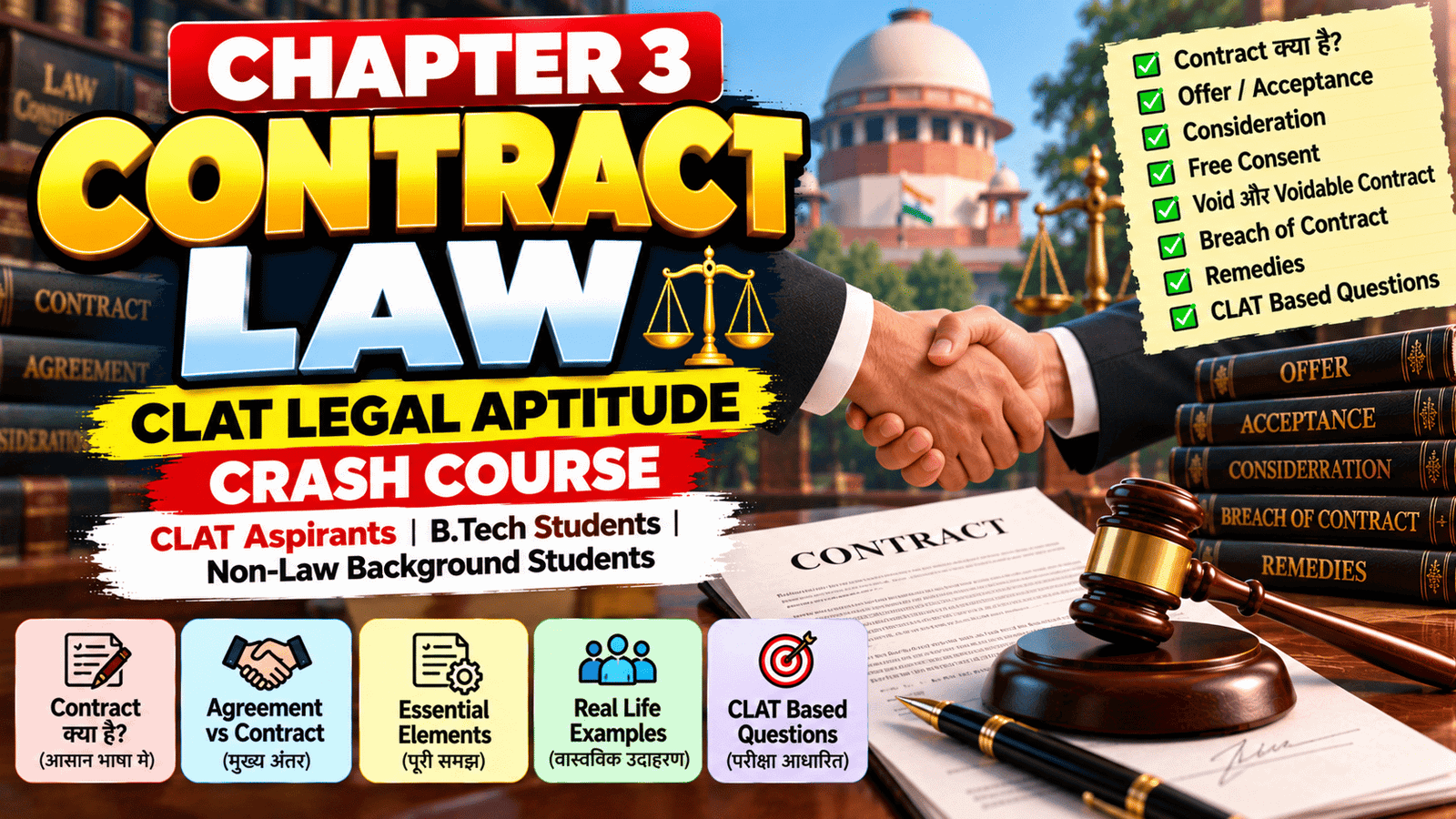
CHAPTER 3 — CONTRACT LAW
CLAT LEGAL APTITUDE CRASH COURSE
CLAT Aspirants | B.Tech Students | Non-Law Background Students
CHAPTER INTRODUCTION
Contract Law CLAT Legal Reasoning का सबसे important और logic-based topic है।
इस chapter में आपको केवल definitions याद नहीं करनी हैं। आपको यह समझना है कि किसी situation में:
- Contract बना या नहीं?
- Offer हुआ या नहीं?
- Acceptance valid थी या नहीं?
- Consideration मौजूद था या नहीं?
- Parties contract करने के लिए competent थीं या नहीं?
- Consent free थी या नहीं?
- Agreement void है या voidable?
- Breach हुआ या नहीं?
- किस party को remedy मिल सकती है?
Contract Law के CLAT questions में अक्सर Principle → Facts → Application → Decision pattern आता है। इसलिए आपका main skill होगा:
दिए गए legal principle को facts पर apply करना।
इस chapter में हम पढ़ेंगे:
- Contract क्या है?
- Agreement क्या है?
- Promise क्या है?
- Contract और Agreement में अंतर
- Valid Contract के Essentials
- Offer / Proposal
- Invitation to Offer
- Acceptance
- Communication of Offer and Acceptance
- Revocation
- Counter Offer
- Consideration
- Capacity to Contract
- Minor
- Minor की Contractual Position
- Person of Unsound Mind
- Disqualified Persons
- Free Consent
- Coercion
- Undue Influence
- Fraud
- Misrepresentation
- Mistake
- Void Agreement
- Voidable Contract
- Illegal Agreement
- Unlawful Object and Consideration
- Restraint of Marriage
- Restraint of Trade
- Restraint of Legal Proceedings
- Wagering Agreement
- Contingent Contract
- Quasi-Contract
- Indemnity
- Guarantee
- Bailment
- Pledge
- Agency
- Quantum Meruit
- Performance and Discharge
- Breach of Contract
- Remedies
- Principle-Facts-Decision Method
- CLAT Contract Law Traps
- 30-Second Revision Formula
1. CONTRACT क्या है?
Contract ऐसा agreement है जिसे law द्वारा enforce किया जा सकता है।
सरल Formula:
CONTRACT = AGREEMENT + LEGAL ENFORCEABILITY
भारतीय Contract Law की basic framework Indian Contract Act, 1872 से जुड़ी है।
Example
A कहता है:
“मैं तुम्हें अपनी bike ₹50,000 में बेचूँगा।”
B कहता है:
“मैं ₹50,000 में bike खरीदने के लिए तैयार हूँ।”
यदि सभी legal requirements पूरी हैं, तो यह agreement contract बन सकता है।
2. AGREEMENT क्या है?
Agreement का basic idea है:
Promise या promises forming consideration for each other.
सरल भाषा में:
जब parties किसी proposal पर सहमत होती हैं और promises एक-दूसरे से legally relevant relationship बनाती हैं, तो agreement का concept आता है।
Basic Formula
PROPOSAL + ACCEPTANCE = PROMISE
और:
AGREEMENT + ENFORCEABILITY = CONTRACT
3. PROMISE क्या है?
जब किसी proposal को accept कर लिया जाता है, तो accepted proposal promise बन सकता है।
Example
A:
“मैं तुम्हें अपना laptop ₹30,000 में बेचूँगा।”
B:
“मैं इसे ₹30,000 में खरीदने के लिए तैयार हूँ।”
B की valid acceptance के बाद proposal promise में convert हो सकता है।
4. CONTRACT और AGREEMENT में अंतर
यह CLAT का basic लेकिन बहुत important distinction है।
| Agreement | Contract |
|---|---|
| Wider concept है | Narrower concept है |
| हर contract एक agreement है | हर agreement contract नहीं है |
| हर agreement legally enforceable नहीं होता | Contract legally enforceable होता है |
| Social/moral arrangements भी हो सकते हैं | Legal enforceability जरूरी है |
Golden Rule
ALL CONTRACTS ARE AGREEMENTS, BUT ALL AGREEMENTS ARE NOT CONTRACTS.
इसे जरूर याद करें।
5. ESSENTIALS OF A VALID CONTRACT
एक valid contract के लिए generally ये elements important हैं:
- Offer / Proposal
- Acceptance
- Lawful Consideration
- Competent Parties
- Free Consent
- Lawful Object
- Certainty
- Possibility of Performance
- Agreement expressly void न हो
- Legal enforceability
Memory Formula
O + A + C + C + F + L + C + P
Offer + Acceptance + Consideration + Capacity + Free Consent + Lawful Object + Certainty + Possibility
6. OFFER / PROPOSAL
Offer या Proposal वह expression है जिसमें एक व्यक्ति दूसरे को कुछ करने या न करने की willingness इस intention से बताता है कि दूसरा व्यक्ति assent दे और agreement बने।
सरल भाषा में:
Offer = “मैं यह करने को तैयार हूँ, अगर तुम accept करो।”
Example
A कहता है:
“मैं अपनी car ₹5 lakh में बेचने को तैयार हूँ।”
यह एक offer हो सकता है।
7. VALID OFFER की BASIC CONDITIONS
एक valid offer generally:
- Clear होना चाहिए
- Definite होना चाहिए
- Communicated होना चाहिए
- Legal relationship create करने का intention होना चाहिए
- Acceptance के लिए open होना चाहिए
- केवल vague statement of intention नहीं होना चाहिए
Example
“मैं शायद अगले महीने अपनी bike बेच दूँ।”
यह definite offer नहीं है।
8. OFFER और INVITATION TO OFFER में अंतर
यह CLAT का बहुत common trap है।
Offer
ऐसा proposal जिसे accept करने पर, बाकी requirements पूरी होने पर, contract बन सकता है।
Invitation to Offer
दूसरों को offer करने के लिए invite करता है।
Example
एक दुकान में लिखा है:
“Shoes ₹999 onwards.”
यह generally customers को offer करने के लिए invite कर सकता है।
Customer purchase करने की इच्छा बताता है और shopkeeper उस offer को accept कर सकता है।
Memory
OFFER = मैं तुम्हें proposal दे रहा हूँ।
INVITATION = मैं तुम्हें proposal देने के लिए बुला रहा हूँ।
9. ADVERTISEMENT — OFFER या INVITATION?
General advertisement अक्सर Invitation to Offer होता है।
लेकिन यदि advertisement sufficiently definite है और circumstances दिखाते हैं कि वह actual legal offer के रूप में intended है, तो result अलग हो सकता है।
CLAT Rule
Advertisement देखकर automatically “Offer” मत चुनिए।
पूछिए:
क्या यह actual legal commitment है या केवल customers को invite कर रहा है?
10. ACCEPTANCE
Acceptance का मतलब है offer की terms को agree करना।
Valid acceptance generally:
- Absolute
- Unqualified
- Communicated
- Properly made
होनी चाहिए।
Example
A:
“मैं अपना laptop ₹40,000 में बेचूँगा।”
B:
“मैं ₹40,000 में खरीदता हूँ।”
यह acceptance हो सकती है।
11. ACCEPTANCE MUST BE ABSOLUTE AND UNQUALIFIED
अगर offer है:
“मैं laptop ₹40,000 में बेचूँगा।”
और B कहता है:
“मैं ₹35,000 में खरीदूँगा।”
तो यह acceptance नहीं है।
यह Counter Offer है।
Formula
Original Offer = ₹40,000
↓
Response = ₹35,000
↓
Acceptance नहीं
↓
Counter Offer
12. COUNTER OFFER
जब offeree original offer को accept करने के बजाय नई terms propose करता है, तो counter-offer arise होता है।
Example
A:
“Bike ₹60,000 में।”
B:
“मैं ₹50,000 दूँगा।”
B ने original offer accept नहीं किया।
B ने नया proposal दिया।
इसलिए:
Negotiation ≠ Acceptance
13. ACCEPTANCE BY CONDUCT
कुछ situations में conduct से भी acceptance establish हो सकती है, यदि applicable circumstances और law ऐसा recognize करते हों।
Example
A ने public reward announce किया:
“जो मेरा lost dog ढूँढकर वापस करेगा, उसे ₹10,000 reward मिलेगा।”
B dog ढूँढकर वापस करता है।
B का conduct acceptance के legal analysis में relevant हो सकता है।
14. COMMUNICATION OF OFFER
जब तक offer communicated नहीं हुआ, सामान्यतः कोई व्यक्ति unknowingly उसे accept नहीं कर सकता।
Example
A ने B को बताए बिना मन में decide किया:
“मैं B को अपनी car बेचूँगा।”
B को इस offer की जानकारी ही नहीं है।
B की action को acceptance मानने का question नहीं उठता।
Memory
NO COMMUNICATION → NO NORMAL ACCEPTANCE
15. COMMUNICATION OF ACCEPTANCE
Acceptance भी generally communicated होनी चाहिए, subject to applicable rules and exceptions.
Example
A ने B को offer दिया।
B मन में सोचता है:
“मैं accept करता हूँ।”
लेकिन B ने कोई communication नहीं की।
Question में यह देखना होगा कि applicable rule के अनुसार acceptance complete हुई या नहीं।
16. REVOCATION OF OFFER
Revocation = Offer को वापस लेना।
Offeror कुछ circumstances में offer revoke कर सकता है, लेकिन revocation valid होने के लिए legal requirements satisfy होनी चाहिए।
Example
A ने B को offer दिया।
Acceptance से पहले A ने validly offer revoke कर दिया।
अब B बाद में acceptance communicate करता है।
Legal result timing और applicable rules पर depend करेगा।
17. OFFER कब समाप्त हो सकता है?
Offer terminate हो सकता है:
- Revocation से
- Rejection से
- Counter-offer से
- Time lapse से
- Condition failure से
- Death/insanity in relevant circumstances
- Prescribed/reasonable time में acceptance न होने से
- Other legally recognized circumstances से
CLAT Tip
Question में timeline बनाइए:
Offer → Revocation → Acceptance
Sequence बहुत important है।
18. CONSIDERATION
Consideration contract law का core concept है।
सरल भाषा में:
Consideration = Contract के बदले मिलने वाला legal value / something in return.
Example
A:
“मैं तुम्हें laptop ₹30,000 में दूँगा।”
B:
₹30,000 देता है।
यह consideration का basic example है।
Memory
NO CONSIDERATION → GENERAL RULE: NO CONTRACT
लेकिन law में exceptions exist कर सकते हैं।
19. CONSIDERATION का BASIC LOGIC
Contract में parties के बीच legal value का exchange हो सकता है।
Example
A promises to sell a car.
B promises to pay ₹5 lakh.
A की promise के बदले B की promise consideration हो सकती है।
20. CONSIDERATION MUST BE LAWFUL
अगर consideration itself unlawful है, तो agreement enforceable नहीं हो सकता।
Example
A B को पैसे देता है ताकि B illegal act करे।
यह lawful consideration नहीं है।
Formula
Agreement + Unlawful Consideration = Invalid / Unenforceable
21. LAWFUL OBJECT
Contract का object भी lawful होना चाहिए।
Example
A और B agree करते हैं कि वे illegal activity करेंगे।
यह lawful contract नहीं बन सकता।
याद रखें
Lawful Consideration + Lawful Object
दोनों important हैं।
22. CAPACITY TO CONTRACT
हर व्यक्ति legally valid contract में enter नहीं कर सकता।
Contracting parties को legally competent होना चाहिए।
Basic categories:
- Major
- Sound Mind
- Not legally disqualified
23. MINOR
Minor generally वह व्यक्ति है जो applicable law के अनुसार majority की age तक नहीं पहुँचा है।
Indian Contract Law में minor की contractual capacity एक major exam topic है।
Important Rule
A minor is generally not competent to contract.
इसलिए minor के साथ ordinary contractual agreement की enforceability adult contract जैसी नहीं होती।
24. MINOR के CONTRACT की POSITION
CLAT में minor-related questions बहुत common हैं।
Basic Rule
Minor को generally contractual liability में उसी तरह bound नहीं किया जाता जैसे competent adult को।
लेकिन facts के अनुसार minor को मिलने वाले benefits, necessaries और अन्य legal consequences अलग हो सकते हैं।
25. MINOR और ESTOPPEL
General principle:
Minor की incapacity को केवल estoppel के जरिए normally bypass नहीं किया जा सकता।
अगर किसी minor ने अपनी age गलत बताई, तब भी contract law में उसकी statutory incapacity का analysis अलग रहेगा।
CLAT Trap
“Minor ने खुद को major बताया, इसलिए वह automatically contract से bound है।”
यह conclusion automatically सही नहीं है।
26. MINOR और NECESSARIES
Minor को genuinely necessary goods/services उपलब्ध कराए गए हों तो law कुछ circumstances में supplier को minor की property से reimbursement की अनुमति दे सकता है।
लेकिन यह normal contractual personal liability जैसा नहीं होता।
Example
Minor को essential food, clothing या education-related necessities दी गईं।
Question में applicable law के अनुसार reimbursement का issue arise हो सकता है।
27. MINOR के BENEFIT वाला AGREEMENT
Minor generally incompetent to contract है, लेकिन कोई transaction यदि minor के benefit के लिए है, तो legal analysis अलग हो सकता है।
Example
Minor को beneficial arrangement दिया गया।
Question में देखें:
- Agreement का nature क्या है?
- Minor पर liability है या benefit?
- Given principle क्या कहता है?
28. PERSON OF UNSOUND MIND
Contract के लिए व्यक्ति के पास transaction को समझने और उसके effect पर rational judgment बनाने की capacity होनी चाहिए।
Important
“Unsound Mind” का मतलब यह नहीं कि व्यक्ति हर समय incapable है।
कुछ व्यक्ति:
- कभी competent हो सकते हैं
- कभी incapable हो सकते हैं
CLAT Rule
Time of Contract Matters.
29. UNSOUND MIND — EXAMPLE
A सामान्यतः mentally competent है लेकिन जिस समय contract sign कर रहा है, उस समय वह transaction समझने में incapable है।
तो contractual capacity का question उसी relevant time पर examine किया जाएगा।
30. DISQUALIFIED PERSONS
कुछ persons specific legal rules के कारण contractual capacity में restrictions face कर सकते हैं।
Examples may include:
- Persons under specific legal disability
- Certain enemy aliens during war
- Persons under legal restrictions
- Certain statutory categories
CLAT Rule
यदि specific principle दिया गया है, तो उसी को apply करें।
31. FREE CONSENT
Valid contract के लिए consent Free होना चाहिए।
Consent free तब मानी जाती है जब वह:
- Coercion
- Undue Influence
- Fraud
- Misrepresentation
- Mistake
से caused न हो, subject to applicable rules.
32. CONSENT क्या है?
Consent का basic meaning है:
Parties agree upon the same thing in the same sense.
Latin expression:
Consensus ad idem
Meaning:
Meeting of Minds
Example
A सोचता है कि वह Black Horse खरीद रहा है।
B सोचता है कि वह White Horse बेच रहा है।
अगर दोनों अलग subject matter पर सोच रहे हैं, तो genuine consensus ad idem का issue arise हो सकता है।
33. COERCION
Coercion = Force / Threat based consent
यदि किसी व्यक्ति की consent unlawful pressure, threat या legally prohibited conduct के माध्यम से obtained हुई है, तो consent free नहीं हो सकती।
Example
A B को धमकी देता है:
“अगर तुम agreement sign नहीं करोगे तो मैं तुम्हें serious harm पहुँचाऊँगा।”
B डरकर sign करता है।
यह free consent नहीं हो सकती।
Memory
COERCION = THREAT / FORCE
34. UNDUE INFLUENCE
Undue Influence तब arise हो सकता है जब एक व्यक्ति दूसरे की will पर dominant position रखता है और उस position का उपयोग करके unfair advantage प्राप्त करता है।
Example
A एक elderly dependent person का trusted caretaker है।
Caretaker उस dependency का misuse करके unfair property transfer करवाता है।
यह undue influence का question हो सकता है।
Memory
UNDUE INFLUENCE = DOMINANT POSITION + UNFAIR ADVANTAGE
35. COERCION vs UNDUE INFLUENCE
| Coercion | Undue Influence |
|---|---|
| Force/Threat based pressure | Relationship/position based domination |
| Fear पैदा किया जाता है | Will पर influence dominate करता है |
| Direct pressure common | Trust/dependency/dominant relationship common |
| “Sign or face harm” | “You trust/depend on me, इसलिए unfair advantage” |
Memory
Coercion = डर
Undue Influence = दबदबा / Dominance
36. FRAUD
Fraud में deliberate deception का element होता है।
Important ideas:
- False statement knowingly
- Active concealment
- Intention to deceive
- Promise without intention to perform
- Other legally recognized fraudulent conduct
Example
A जानता है कि car accident-damaged है लेकिन B को knowingly बताता है:
“यह car कभी accident में नहीं गई।”
यदि legal ingredients satisfy होते हैं, तो fraud का issue arise हो सकता है।
37. MISREPRESENTATION
Misrepresentation में false statement हो सकती है, लेकिन fraud की तरह deliberate intention to deceive जरूरी नहीं होती।
Example
A genuinely believes कि property का area 2,000 sq ft है और B को यही बताता है।
बाद में पता चलता है कि area 1,500 sq ft है।
यदि statement false थी लेकिन A genuinely believed it to be true, तो facts misrepresentation की तरफ जा सकते हैं, subject to legal ingredients।
38. FRAUD vs MISREPRESENTATION
| Fraud | Misrepresentation |
|---|---|
| Intentional deception | False statement without necessary fraudulent intent |
| Knowledge of falsity हो सकती है | Person statement को honestly true मान सकता है |
| Deliberate concealment possible | Incorrect representation हो सकती है |
| Dishonest intention important | Fraudulent intention necessarily present नहीं |
Memory
FRAUD = KNOWINGLY DECEIVE
MISREPRESENTATION = FALSE BUT NOT NECESSARILY INTENTIONALLY DECEPTIVE
39. MISTAKE
Contract law में mistake दो broad forms में discuss होती है:
- Mistake of Fact
- Mistake of Law
Mistake of Fact
Parties किसी important fact को गलत समझती हैं।
Mistake of Law
Law की misunderstanding.
40. MUTUAL MISTAKE
जब दोनों parties essential fact के बारे में mistake में हों, तो agreement की validity प्रभावित हो सकती है।
Example
A और B दोनों believe करते हैं कि horse alive है।
असल में horse पहले ही मर चुका है।
यदि horse transaction का essential subject matter था, तो mutual mistake legal effect डाल सकती है।
41. UNILATERAL MISTAKE
जब केवल एक party mistake में हो।
General rule के अनुसार unilateral mistake हर situation में contract को void नहीं बनाती।
CLAT Tip
अगर question में लिखा है:
“Only one party was mistaken.”
तो तुरंत “Contract Void” मत चुनिए।
42. VOID AGREEMENT
Void Agreement ऐसा agreement है जिसे law enforce नहीं करता।
सरल भाषा में:
No Legal Enforceability
Example
अगर agreement का object unlawful है, तो applicable legal rule के अनुसार agreement void/unenforceable हो सकता है।
43. VOIDABLE CONTRACT
Voidable contract वह contract है जो एक party के option पर avoid किया जा सकता है।
Common Context
- Coercion
- Fraud
- Misrepresentation
- Undue Influence
जहाँ law aggrieved party को contract avoid करने का option देता है।
Memory
VOID = No Enforceability
VOIDABLE = One Party Can Choose to Avoid
44. VOID vs VOIDABLE
| Void | Voidable |
|---|---|
| Law enforce नहीं करता | Aggrieved party avoid कर सकती है |
| Fundamental legal defect हो सकता है | Consent-related defect common हो सकता है |
| Generally enforceable contractual obligation नहीं | Avoid किए जाने तक legal effect हो सकता है |
| Party के choice पर dependent नहीं | Aggrieved party के option पर depend कर सकता है |
45. ILLEGAL AGREEMENT
Illegal agreement का object या consideration law के विरुद्ध हो सकता है।
Example
A और B agree करते हैं कि वे चोरी करेंगे।
यह lawful contractual obligation नहीं है।
Important
हर void agreement जरूरी नहीं कि illegal हो।
लेकिन illegal agreement का legal effect generally अधिक serious होता है।
46. UNLAWFUL OBJECT
Agreement का object unlawful हो सकता है अगर वह:
- Law द्वारा prohibited हो
- Law की provisions defeat करता हो
- Fraudulent हो
- किसी person/property को injury involve करता हो
- Immoral हो
- Public Policy के विरुद्ध हो
CLAT Rule
Question में:
Object
और
Consideration
दोनों check करें।
47. AGREEMENT IN RESTRAINT OF MARRIAGE
किसी adult के marriage को legally restrict करने वाले agreements generally void हो सकते हैं, subject to applicable law.
Example
A agrees never to marry anyone.
ऐसे agreement की enforceability का question arise हो सकता है।
Memory
Restraint of Marriage → Generally Void
48. AGREEMENT IN RESTRAINT OF TRADE
किसी व्यक्ति को lawful profession, trade या business करने से restrict करने वाले agreements generally problematic/void हो सकते हैं, subject to recognized exceptions.
Example
A कहता है:
“तुम lifeभर कोई business नहीं कर सकते।”
ऐसे broad restraint की validity का question arise करेगा।
CLAT Trap
हर non-compete clause का result automatically same नहीं होता।
Specific facts और applicable rule देखें।
49. AGREEMENT IN RESTRAINT OF LEGAL PROCEEDINGS
ऐसा agreement जो किसी व्यक्ति को अपने legal rights enforce करने के लिए courts का access completely surrender करने को कहता है, generally legally problematic हो सकता है, subject to statutory rules and exceptions.
Example
A और B agree करते हैं:
“किसी भी dispute में कोई party कभी court नहीं जाएगी।”
ऐसे clause की validity question में analyze करनी होगी।
50. WAGERING AGREEMENT
Wagering agreement में parties किसी uncertain event के outcome पर money/property जीतने या हारने की arrangement करती हैं।
Example
A कहता है:
“अगर India match जीतेगी तो मैं तुम्हें ₹10,000 दूँगा; अगर हारेगी तो तुम मुझे ₹10,000 देना।”
अगर transaction के essential features wager को satisfy करते हैं, तो wagering agreement का issue arise हो सकता है।
Memory
WAGER = UNCERTAIN EVENT + WIN / LOSE
51. WAGERING AGREEMENT vs CONTINGENT CONTRACT
दोनों में uncertain event हो सकता है, लेकिन दोनों identical नहीं हैं।
Wager
Parties का primary interest event के outcome में winning/losing होता है।
Contingent Contract
Contract किसी collateral event के happening/non-happening पर depend कर सकता है।
CLAT Trap
हर uncertain event वाला agreement wager नहीं है।
52. CONTINGENT CONTRACT
Contingent contract ऐसा contract है जिसका performance किसी uncertain collateral event के happening या non-happening पर depend करता है।
Example
A promises to pay B ₹1 lakh if B’s house is destroyed by fire.
यदि applicable conditions satisfy करती हैं, तो contingent contract का concept relevant हो सकता है।
53. QUASI-CONTRACT
Quasi-contract technically ordinary consensual contract नहीं होता।
यह law द्वारा imposed obligation होता है ताकि unjust enrichment या unfair benefit को address किया जा सके।
Example
A गलती से B को payment कर देता है।
B को circumstances के अनुसार वह amount return करना पड़ सकता है।
यह जरूरी नहीं कि A और B ने पहले कोई contract बनाया था।
Memory
QUASI-CONTRACT = OBLIGATION CREATED BY LAW
54. INDEMNITY
Indemnity में एक party दूसरी party को specified loss से protect करने का promise करती है।
Example
A promises B:
“अगर तुम्हें मेरे action से कोई specified loss हुआ, तो मैं compensate करूँगा।”
Memory
INDEMNITY = PROTECTION AGAINST LOSS
55. GUARANTEE
Guarantee में generally तीन parties होती हैं:
- Creditor
- Principal Debtor
- Surety
Surety promise करता है कि यदि principal debtor default करता है, तो वह liability discharge करेगा according to law.
Memory
GUARANTEE = 3 PARTIES
56. INDEMNITY vs GUARANTEE
| Indemnity | Guarantee |
|---|---|
| Generally 2 parties | Generally 3 parties |
| Loss से protection | Default की स्थिति में liability |
| Indemnifier + Indemnity-holder | Creditor + Principal Debtor + Surety |
| Primary promise structure | Surety/secondary obligation |
Easy Memory
INDEMNITY = LOSS
GUARANTEE = DEFAULT
57. BAILMENT
Bailment में goods एक व्यक्ति दूसरे को किसी specific purpose के लिए deliver करता है, इस understanding के साथ कि purpose पूरा होने पर goods return/dispose किए जाएंगे according to directions.
Example
A अपनी watch repair के लिए B को देता है।
B repair करके watch A को return करता है।
यह bailment का basic example है।
Parties
Bailor = Goods देने वाला
Bailee = Goods receive करने वाला
58. PLEDGE
Pledge में goods security के रूप में दिए जाते हैं, generally debt/payment/security purpose के लिए।
Parties
Pawnor = Goods देने वाला
Pawnee = Goods receive करने वाला
Memory
BAILMENT = PURPOSE
PLEDGE = SECURITY
59. AGENCY
Agency में एक person दूसरे के behalf पर acts करता है।
Parties
Principal
और
Agent
Agent principal की authority के भीतर acts करता है।
Example
A, B को अपनी property sell करने के लिए authorize करता है।
B = Agent
A = Principal
60. AUTHORITY OF AGENT
Agent की authority:
- Express हो सकती है
- Implied हो सकती है
- Circumstances से arise हो सकती है
CLAT Trap
Agent ने principal की authority के अंदर act किया या बाहर, यह check करें।
61. EMPLOYER–EMPLOYEE vs INDEPENDENT CONTRACTOR
Contract questions में relationship भी important हो सकता है।
अगर व्यक्ति employer के control और direction के under काम करता है, तो employment relationship का issue हो सकता है।
Independent contractor comparatively अधिक independent control रख सकता है।
CLAT Tip
पूछें:
Who controls the work?
How much independence exists?
62. PERFORMANCE OF CONTRACT
Contract बनने के बाद parties को अपनी contractual promises perform करनी होती हैं, subject to applicable rules.
Example
A ने B को goods deliver करने का promise किया।
B ने payment करने का promise किया।
दोनों अपने obligations perform करते हैं।
63. DISCHARGE OF CONTRACT
Contract विभिन्न ways से discharge हो सकता है:
- Performance
- Mutual Agreement
- Impossibility/Frustration, where applicable
- Breach
- Operation of Law
- Lapse of Time, where legally applicable
Memory
Contract Created → Obligations → Performance / Discharge
64. BREACH OF CONTRACT
जब party contractual obligation perform नहीं करती, तो breach का issue arise हो सकता है।
Example
A ने promise किया कि वह 1 June को B को machine deliver करेगा।
A बिना lawful justification के machine deliver नहीं करता।
B breach-related remedy seek कर सकता है, subject to law.
65. REMEDIES FOR BREACH
Contract breach में possible remedies include:
- Damages
- Specific Performance, where legally available
- Injunction, where appropriate
- Rescission, in applicable situations
- Other statutory remedies
CLAT Rule
हर breach में same remedy automatically नहीं मिलती।
Facts और applicable legal rule देखें।
66. DAMAGES
Damages का basic purpose injured party को monetary compensation देना है।
Example
A ने contract breach किया और B को legally recoverable financial loss हुआ।
B damages claim कर सकता है according to applicable principles.
Important
Damages का purpose generally punishment नहीं, बल्कि compensation है।
67. QUANTUM MERUIT
Latin phrase:
Quantum Meruit
Meaning:
As much as earned / reasonable amount for work done.
यदि किसी person ने work perform किया है और circumstances में law उसे payment का entitlement देता है, तो quantum meruit principle relevant हो सकता है।
Memory
QUANTUM MERUIT = PAYMENT FOR VALUE OF WORK DONE
68. CONTRACT LAW में PRINCIPLE–FACTS METHOD
Contract Law के CLAT questions में अक्सर आपको एक legal principle दिया जाता है।
फिर facts दिए जाते हैं।
आपको पूछना है:
STEP 1
क्या contract/offer/agreement exist करता है?
STEP 2
क्या legal requirement पूरी हुई?
STEP 3
क्या कोई defect है?
STEP 4
Defect किससे जुड़ा है?
- Capacity
- Consent
- Consideration
- Object
- Offer
- Acceptance
- Legality
STEP 5
Final legal result क्या है?
69. CONTRACT QUESTION SOLVING FORMULA
OFFER
↓
ACCEPTANCE
↓
CONSIDERATION
↓
CAPACITY
↓
FREE CONSENT
↓
LAWFUL OBJECT
↓
VALIDITY
↓
BREACH / REMEDY
अगर किसी mandatory requirement पर failure होता है, तो आगे की legal analysis बदल सकती है।
70. TIMELINE METHOD
Contract questions में timeline बहुत powerful है।
Example
Day 1: A makes offer
↓
Day 2: A revokes offer
↓
Day 3: B accepts
अब question:
क्या Day 3 की acceptance valid है?
Answer निकालने के लिए chronology देखें।
71. OFFER → COUNTER-OFFER → ACCEPTANCE TRAP
Example
A:
“₹1 lakh में car.”
B:
“₹80,000.”
A:
“ठीक है ₹80,000.”
अब legal sequence:
Original Offer
↓
Counter Offer
↓
Acceptance
B ने original offer accept नहीं किया था।
B ने counter-offer दिया था।
A ने उस counter-offer को accept किया।
72. CONSENT TRAP
Question में लिखा:
“B signed the contract voluntarily.”
लेकिन facts में लिखा है:
“A threatened B with serious harm.”
अब केवल “signed voluntarily” phrase देखकर answer मत चुनिए।
पूछें:
Was the consent actually free?
73. MINOR TRAP
Question:
A ने अपनी age 21 बताकर contract किया जबकि वह minor था।
Option:
“A is bound because he represented himself as major.”
यह automatically correct नहीं है।
पहले capacity rule apply करें।
74. FRAUD vs MISREPRESENTATION TRAP
Question में false statement है।
पूछें:
क्या speaker जानता था कि statement false है?
Yes + Intention to Deceive
→ Fraud की direction
Genuine Belief
→ Misrepresentation की direction
75. COERCION vs UNDUE INFLUENCE TRAP
अगर facts में:
Threat / Force
→ Coercion
अगर facts में:
Dominant Relationship + Unfair Advantage
→ Undue Influence
76. VOID vs VOIDABLE TRAP
अगर option कहता है:
“Contract is void because consent was obtained through coercion.”
तो question को ध्यान से पढ़ें।
Coercion generally voidable contract की direction में ले जा सकता है, न कि automatically void.
Memory
Defective Consent → Often Voidable
Fundamental Illegality / Statutory Voidness → Void
77. CONSIDERATION TRAP
Student सोचता है:
“दो लोगों ने agreement किया, इसलिए contract है।”
लेकिन पूछें:
Consideration है?
Consideration lawful है?
क्या कोई exception है?
78. WAGER TRAP
Question में uncertain event है।
इसका मतलब automatically wager नहीं है।
पूछें:
- क्या parties winning/losing money की arrangement कर रही हैं?
- क्या event uncertain है?
- क्या parties का interest केवल stake जीतने/हारने में है?
- क्या कोई special legal rule लागू है?
79. CONTRACT LAW — HIGH-YIELD DIFFERENCES
AGREEMENT vs CONTRACT
Agreement = Understanding
Contract = Enforceable Agreement
OFFER vs INVITATION
Offer = Acceptance से contract बन सकता है
Invitation = Offer करने का invitation
OFFER vs COUNTER-OFFER
Offer = Original Proposal
Counter-offer = New Proposal
VOID vs VOIDABLE
Void = Unenforceable
Voidable = Aggrieved Party May Avoid
FRAUD vs MISREPRESENTATION
Fraud = Intentional Deception
Misrepresentation = False Statement Without Necessary Fraudulent Intention
COERCION vs UNDUE INFLUENCE
Coercion = Threat / Force
Undue Influence = Dominant Position + Unfair Advantage
INDEMNITY vs GUARANTEE
Indemnity = Loss Protection
Guarantee = Default Protection
BAILMENT vs PLEDGE
Bailment = Delivery for Purpose
Pledge = Delivery as Security
THEFT vs CONTRACT BREACH
Theft = Criminal Dishonest Taking
Breach = Contractual Obligation Not Performed
80. B.Tech / NON-LAW STUDENTS के लिए CONTRACT LAW को ऐसे समझें
Contract को programming logic की तरह समझिए।
मान लीजिए:
IF
Offer = Yes
AND Acceptance = Yes
AND Consideration = Yes
AND Capacity = Yes
AND Free Consent = Yes
AND Lawful Object = Yes
THEN
Valid Contract
अगर:
Capacity = No
तो legal result बदल सकता है।
अगर:
Free Consent = No
तो contract voidable हो सकता है, depending on the defect.
अगर:
Object = Illegal
तो agreement unenforceable/void हो सकता है।
यही Contract Law का logical structure है।
81. CONTRACT LAW MASTER CHECKLIST
हर question में यह checklist लगाएँ:
OFFER
क्या actual offer था?
ACCEPTANCE
क्या acceptance absolute और unqualified थी?
COMMUNICATION
क्या offer/acceptance properly communicated हुई?
CONSIDERATION
क्या consideration मौजूद थी?
CAPACITY
क्या parties competent थीं?
CONSENT
क्या consent free थी?
OBJECT
क्या object lawful था?
CERTAINTY
क्या terms sufficiently certain थीं?
POSSIBILITY
क्या performance possible थी?
VALIDITY
क्या agreement किसी statutory rule से void है?
BREACH
क्या obligation perform नहीं हुई?
REMEDY
क्या legal remedy available है?
82. CLAT CONTRACT LAW — COMMON TRAPS
TRAP 1
“Every agreement is a contract.”
❌ गलत।
TRAP 2
“Every advertisement is an offer.”
❌ गलत।
TRAP 3
“Counter-offer is acceptance.”
❌ गलत।
TRAP 4
“Minor is always personally liable under contract.”
❌ गलत।
TRAP 5
“Every false statement is fraud.”
❌ गलत।
TRAP 6
“Every mistake makes contract void.”
❌ गलत।
TRAP 7
“Threat and undue influence are same.”
❌ गलत।
TRAP 8
“Every uncertain event is a wager.”
❌ गलत।
TRAP 9
“Void and voidable mean the same thing.”
❌ गलत।
TRAP 10
“Presence of agreement automatically means enforceability.”
❌ गलत।
83. 30-SECOND CONTRACT LAW REVISION
Exam से पहले यह पूरा section revise करें:
CONTRACT
Agreement + Legal Enforceability
AGREEMENT
Proposal + Acceptance
VALID CONTRACT
Offer + Acceptance + Consideration + Capacity + Free Consent + Lawful Object
OFFER
Definite Proposal
INVITATION
Invitation to Make Offer
ACCEPTANCE
Absolute + Unqualified
COUNTER-OFFER
New Proposal
CONSIDERATION
Legal Value / Something in Return
MINOR
Generally Not Competent to Contract
UNSOUND MIND
Capacity at Relevant Time
FREE CONSENT
No Coercion + No Undue Influence + No Fraud + No Misrepresentation + No Relevant Mistake
COERCION
Threat / Force
UNDUE INFLUENCE
Dominant Position + Unfair Advantage
FRAUD
Intentional Deception
MISREPRESENTATION
False Representation Without Necessary Fraudulent Intention
VOID
No Legal Enforceability
VOIDABLE
Aggrieved Party May Avoid
WAGER
Uncertain Event + Win/Lose
QUASI-CONTRACT
Obligation Imposed by Law
INDEMNITY
Loss Protection
GUARANTEE
Default Protection
BAILMENT
Goods Delivered for Purpose
PLEDGE
Goods Delivered as Security
AGENCY
Agent Acts on Behalf of Principal
QUANTUM MERUIT
Payment for Value of Work Done
84. CONTRACT LAW — FINAL EXAM FORMULA
जब भी CLAT में Contract Law का principle आए:
P → F → C → L → R
P = Proposal / Offer
F = Facts
C = Consideration + Consent + Capacity
L = Lawful Object
R = Result
लेकिन practical तरीके से:
OFFER → ACCEPTANCE → CONSIDERATION → CAPACITY → FREE CONSENT → LAWFUL OBJECT → VALIDITY → PERFORMANCE / BREACH → REMEDY
85. FINAL EXAM CHECKLIST
Chapter 3 के बाद आपको इन questions के answers confidently देने आने चाहिए:
- Contract क्या है?
- Agreement क्या है?
- Promise क्या है?
- Contract और Agreement में difference?
- Valid Contract के essentials क्या हैं?
- Offer क्या है?
- Invitation to Offer क्या है?
- Offer और Invitation में difference?
- Acceptance क्या है?
- Acceptance absolute क्यों होनी चाहिए?
- Counter-offer क्या है?
- Offer कब revoke हो सकता है?
- Communication क्यों important है?
- Consideration क्या है?
- Lawful Consideration क्या है?
- Capacity to Contract क्या है?
- Minor कौन है?
- Minor की contractual position क्या है?
- Minor और estoppel का relation?
- Necessaries क्या हैं?
- Unsound Mind का effect क्या है?
- Free Consent क्या है?
- Consensus ad idem क्या है?
- Coercion क्या है?
- Undue Influence क्या है?
- Coercion और Undue Influence में difference?
- Fraud क्या है?
- Misrepresentation क्या है?
- Fraud और Misrepresentation में difference?
- Mistake क्या है?
- Mutual और Unilateral Mistake में difference?
- Void Agreement क्या है?
- Voidable Contract क्या है?
- Void और Voidable में difference?
- Unlawful Object क्या है?
- Restraint of Marriage क्या है?
- Restraint of Trade क्या है?
- Restraint of Legal Proceedings क्या है?
- Wagering Agreement क्या है?
- Wager और Contingent Contract में difference?
- Quasi-Contract क्या है?
- Indemnity क्या है?
- Guarantee क्या है?
- Indemnity और Guarantee में difference?
- Bailment क्या है?
- Pledge क्या है?
- Bailment और Pledge में difference?
- Agency क्या है?
- Principal और Agent कौन होते हैं?
- Quantum Meruit क्या है?
- Contract कैसे discharge होता है?
- Breach of Contract क्या है?
- Damages क्या हैं?
- Specific Performance क्या है?
- Principle-Facts-Decision Method कैसे apply करें?
FINAL TAKEAWAY
Contract Law को ratta मारने के बजाय condition-based logic की तरह पढ़िए।
हर question में पूछिए:
क्या Offer था?
↓
क्या Acceptance हुई?
↓
क्या Consideration है?
↓
क्या Parties Competent हैं?
↓
क्या Consent Free है?
↓
क्या Object और Consideration Lawful हैं?
↓
क्या Agreement किसी statutory rule के कारण Void है?
↓
अगर Contract Valid है, तो क्या Breach हुआ?
↓
अगर Breach हुआ, तो कौन-सी Remedy available है?
सबसे महत्वपूर्ण CLAT Formula:
OFFER → ACCEPTANCE → CONSIDERATION → CAPACITY → FREE CONSENT → LAWFUL OBJECT → VALIDITY → PERFORMANCE / BREACH → REMEDY
और ये distinctions जरूर याद रखें:
AGREEMENT ≠ ALWAYS CONTRACT
VOID ≠ VOIDABLE
FRAUD ≠ MISREPRESENTATION
COERCION ≠ UNDUE INFLUENCE
OFFER ≠ INVITATION
OFFER ≠ COUNTER-OFFER
BAILMENT ≠ PLEDGE
INDEMNITY ≠ GUARANTEE
WAGER ≠ EVERY CONTINGENT CONTRACT
यही distinctions CLAT Legal Reasoning में सबसे ज्यादा traps create करते हैं।